
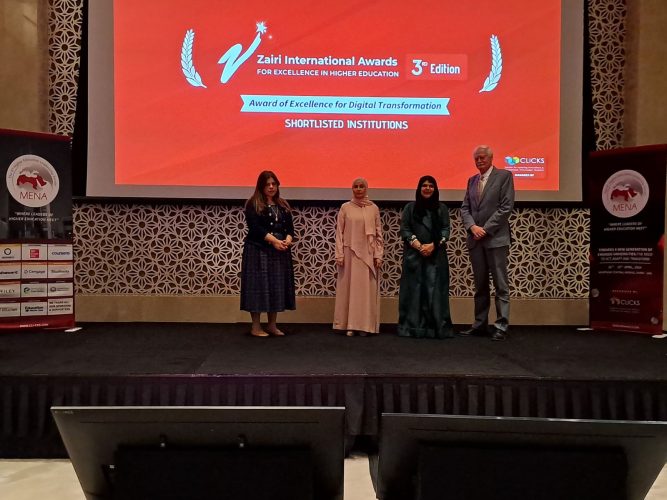
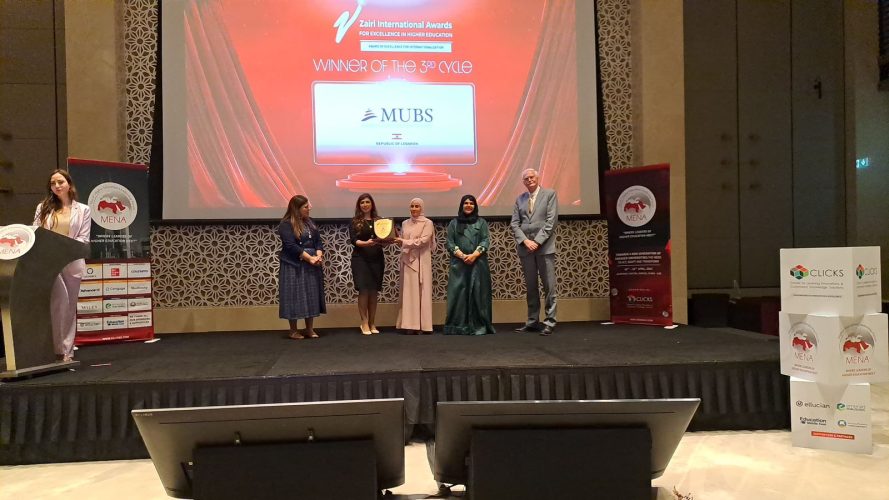
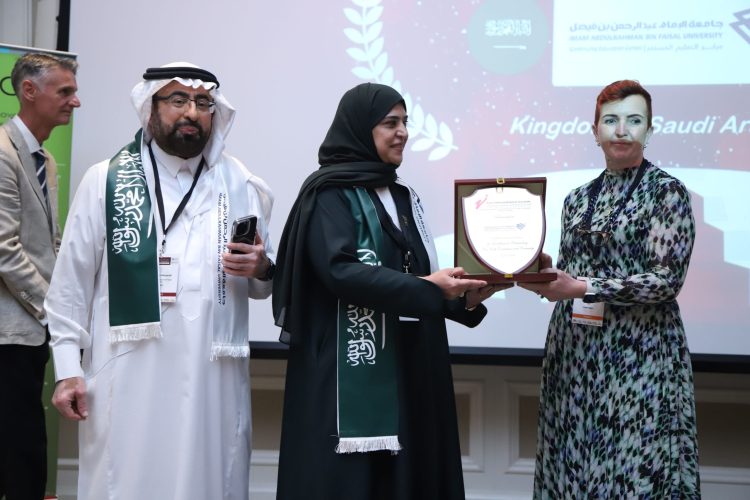
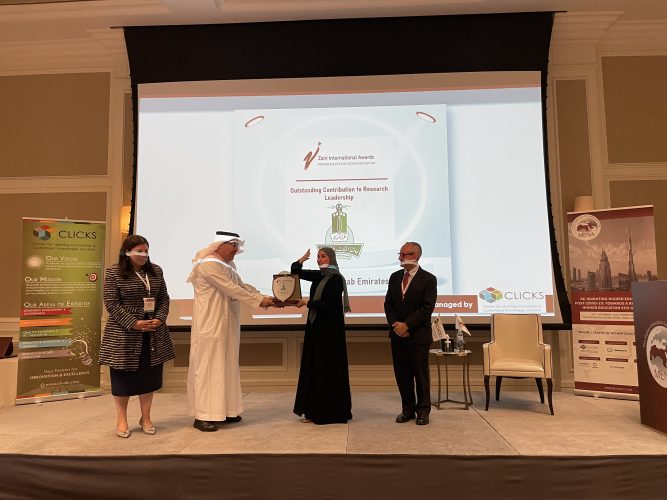
Each year, the Zairi International Awards for Excellence in Higher Education recognizes and celebrates Higher Education Institutions that have pioneered in specific areas related to digital transformation, community engagement, research, internationalization, equity and access, etc.
The selected winners are among higher education institutions that demonstrated success stories and created tangible impact within their own context and that can serve as best practice and model to others.
⁍ Higher education institutions from across the globe are eligible to apply for the Award.
⁍ The application must be completed by a senior administrator of the institution and must be formally endorsed by the Head of the Institution through a separate letter of endorsement, which must be submitted alongside the application.
⁍ All applications and supporting documents (including annexes) must be submitted in English, using the official application form. Any supporting documents originally in another language must be accompanied by an English translation.
⁍ Each institution may apply for one category only per cycle.
⁍ Applications that do not adhere to the submission guidelines, are incomplete, or are submitted after the specified deadlines will not be considered. The Award Secretariat will notify applicants of any ineligible submissions.
⁍ All applications are evaluated through a two-stage assessment process, based on the defined selection criteria.
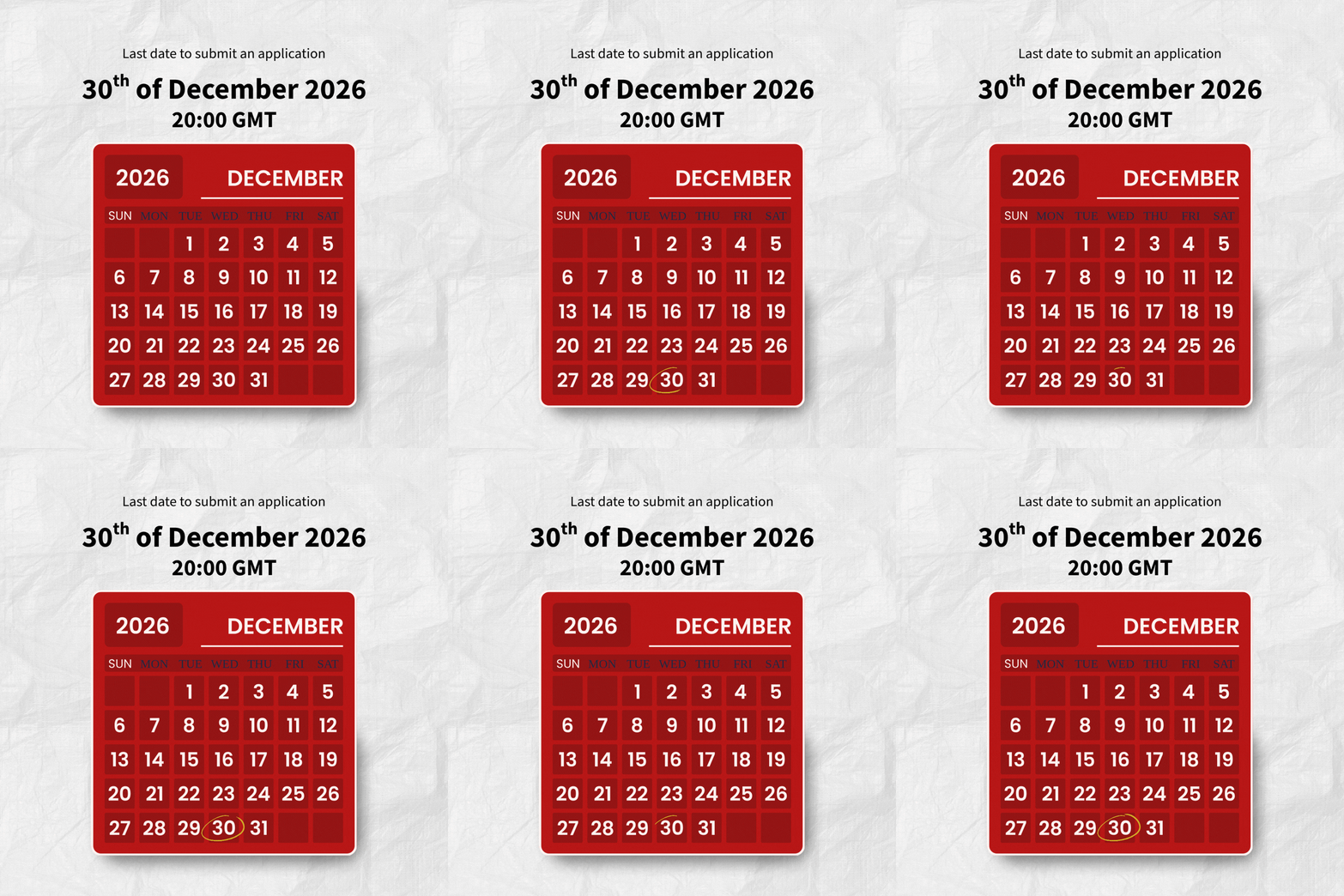
Shortlisted Institutions Announced:
21st January, 2027
Awards Ceremony:
April, 2027
Applications must be submitted using the official award application form (available in both Word and PDF formats). The main application should not exceed ten (10) pages in length. Appendices (annexes) must be used to provide supporting evidence, examples, and documentation.
A letter of endorsement from the Head of the Institution (e.g., Rector, President, Vice Chancellor) must be submitted alongside the application.
⚠️ Important Note: The application should present a clear, well-structured, and evidence-based narrative, explicitly aligned with the selection criteria of the chosen award category. Applicants are expected to demonstrate impact, effectiveness, and sustainability, supported by relevant examples and documentation provided in the annexes.
.
Broadly, the application should include:
1. Description: Details of the institution, its context, and the initiative(s) undertaken, including their objectives and scope.
Expectation:
• Clear contextualization of the institution and the environment in which the initiative operates
• Description of the initiative(s) aligned with the selected award category
2. Justification: Why the HEI should be considered for this award, with explicit reference to the stipulated selection criteria.
Expectation:
• Clear alignment with each of the selection criteria
• Evidence-based justification demonstrating strengths and achievements
3. Innovation: How the HEI has incorporated innovative approaches, perspectives, resources, or partnerships within the initiative(s), in line with the nature of the award category.
Expectation:
• Demonstration of innovation beyond standard practice
• Clear articulation of what differentiates the initiative(s) within the institutional and/or sector context
4. Examples (Evidence of Impact): Tangible examples demonstrating the impact, effectiveness, and sustainability of the initiative(s)/project(s).
Expectation:
• Clear evidence of measurable outcomes and impact
• Demonstration of effectiveness and long-term value
Indicative examples of evidence include, but are not limited to:
• Data, metrics, or performance indicators
• Case examples or project outcomes
• Testimonials or stakeholder feedback
• Reports, dashboards, or evaluation results
5. Adaptability: How the initiative(s)/project(s) can be adopted, transferred, or replicated in different institutional or contextual settings.
Expectation:
• Clear articulation of the transferability and scalability of the initiative(s)
• Identification of key success factors enabling replication
The assessment of all applications is conducted in accordance with the official timeline published for each award cycle.
The assessment and selection process is conducted in an independent, fair, consensus- based, and transparent manner, and is carried out virtually through the following stages:
⁍ All applications are initially screened by an Executive Committee established by CLICKS to ensure compliance with the submission guidelines and eligibility criteria.
⁍ This stage is administrative in nature and does not involve evaluation or scoring of applications. Applications that do not meet the requirements may be deemed ineligible and will not proceed to the next stage.
⁍ An Assessment Committee, comprising 6 to 12 international experts in higher education and quality assurance, is responsible for evaluating the applications based on the defined selection criteria.
⁍ The Committee reviews the submitted applications and supporting documentation and proposes up to three (3) finalists for each award category.
⁍ The Assessment Committee may request additional information or clarification from applicants, where necessary, to support the evaluation process.
⁍ The applications of the shortlisted finalists for each award category are reviewed by an independent Jury, composed of three (3) distinguished experts drawn from government, international organizations, or higher education institutions.
⁍ As part of the selection process, the Jury may request a virtual meeting (up to 30 minutes) with the leadership of the institution to seek further clarification or insight prior to making a final decision.
⁍ Following deliberation, the Jury will select the winner for each award category.
The Award reserves the right to determine the number of shortlisted finalists in each category based on the quality of applications received. In cases where submissions do not meet the required standards, a shortlist may not be announced and/or an award may not be conferred for that category in a given cycle
WhatsApp us